Island living · 5 November 2026 · 10 min read
What Is the Safest and Cheapest Caribbean Island to Live On?
Compare Dominica, Grenada and the Dominican Republic for everyday safety, living costs and the practical checks that matter before moving.
By the Property Caribbean editorial team
What is the safest and cheapest Caribbean island to live on? There is no single, evidence-backed winner. The island with the lowest daily costs may not offer the safety, healthcare or transport you need. Equally, a quiet island can become expensive once you add rent, imported food and medical cover.
Dominica deserves a place on a safety-led shortlist. Grenada is worth considering for an English-speaking island lifestyle. The Dominican Republic offers lower reported everyday costs than Grenada in the data examined here, but comes with more serious crime warnings. These are different choices, not interchangeable answers.
If you are starting your search, explore our Caribbean property destinations alongside this guide. Compare places first, then investigate individual neighbourhoods. This article was researched on 5 November 2026. It is a starting point for due diligence, not a promise of safety or a personalised relocation budget.
WHAT DOES “SAFEST AND CHEAPEST” REALLY MEAN?
Define both words before comparing islands. Safety includes theft and violence, but also road conditions, emergency treatment, storms and the security of your home. Personal circumstances matter too. A retired couple, a family with children and someone working remotely may need very different support.
Cheap should mean the full cost of a workable life, rather than the lowest advertised rent. A flat far from shops may require a car. A coastal home may need more insurance and maintenance. A low purchase price does not settle the cost of ownership.
There is also a geographical distinction. Dominica and Grenada are island states. The Dominican Republic shares Hispaniola with Haiti. Conditions differ across that large island and within the Dominican Republic itself. Country-level advice cannot tell you how every street feels after dark.
HOW WE COMPARED THE OPTIONS
For safety, we reviewed current UK Foreign, Commonwealth and Development Office guidance for Dominica, Grenada and the Dominican Republic. This provides useful practical advice, but it is written for travellers. It is not a statistical league table of resident safety.
For costs, we checked Numbeo's country pages for Grenada and the Dominican Republic. These are crowdsourced estimates, not official household surveys. Their contributor numbers differ substantially. They can suggest questions to ask, but cannot establish the cheapest island in the entire Caribbean.
We have therefore avoided a numerical safety ranking or an unsupported regional winner. The sensible approach is to compare a small shortlist, obtain current local quotes and check whether the destination suits your daily needs. Treat any claim that one island is “completely safe” with caution.
DOMINICA: A STRONG SAFETY-LED STARTING POINT
Dominica is distinct from the Dominican Republic. It is a smaller Eastern Caribbean island known for its forested mountains and volcanic landscape. For someone seeking a quieter setting, it is a credible place to investigate.
The GOV.UK safety guidance for Dominica (opens in a new tab) is a useful planning resource. It describes the crime rate as low, while still recommending secure accommodation and care away from main roads after dark. That supports considering Dominica; it does not prove it is the safest Caribbean island.
Do not assume that a smaller population guarantees a lower household bill. Imported goods, transport and specialist services may affect your budget. Obtain rental quotes for the specific area you want, and ask what electricity, water and internet actually cost at that address.
Location is especially important. FCDO guidance highlights narrow roads, poor sections and landslide risks on the main airport route after bad weather. Test the journey to shops, clinics and the airport. A peaceful hillside home may be less convenient than it first appears.
Dominica is worth shortlisting if nature and a slower pace matter more than extensive nightlife or a wide choice of services. Before committing, confirm healthcare access, residence requirements and the condition of the property. None should be inferred from a beautiful view.
GRENADA: AN ENGLISH-SPEAKING OPTION, NOT A BUDGET GUARANTEE
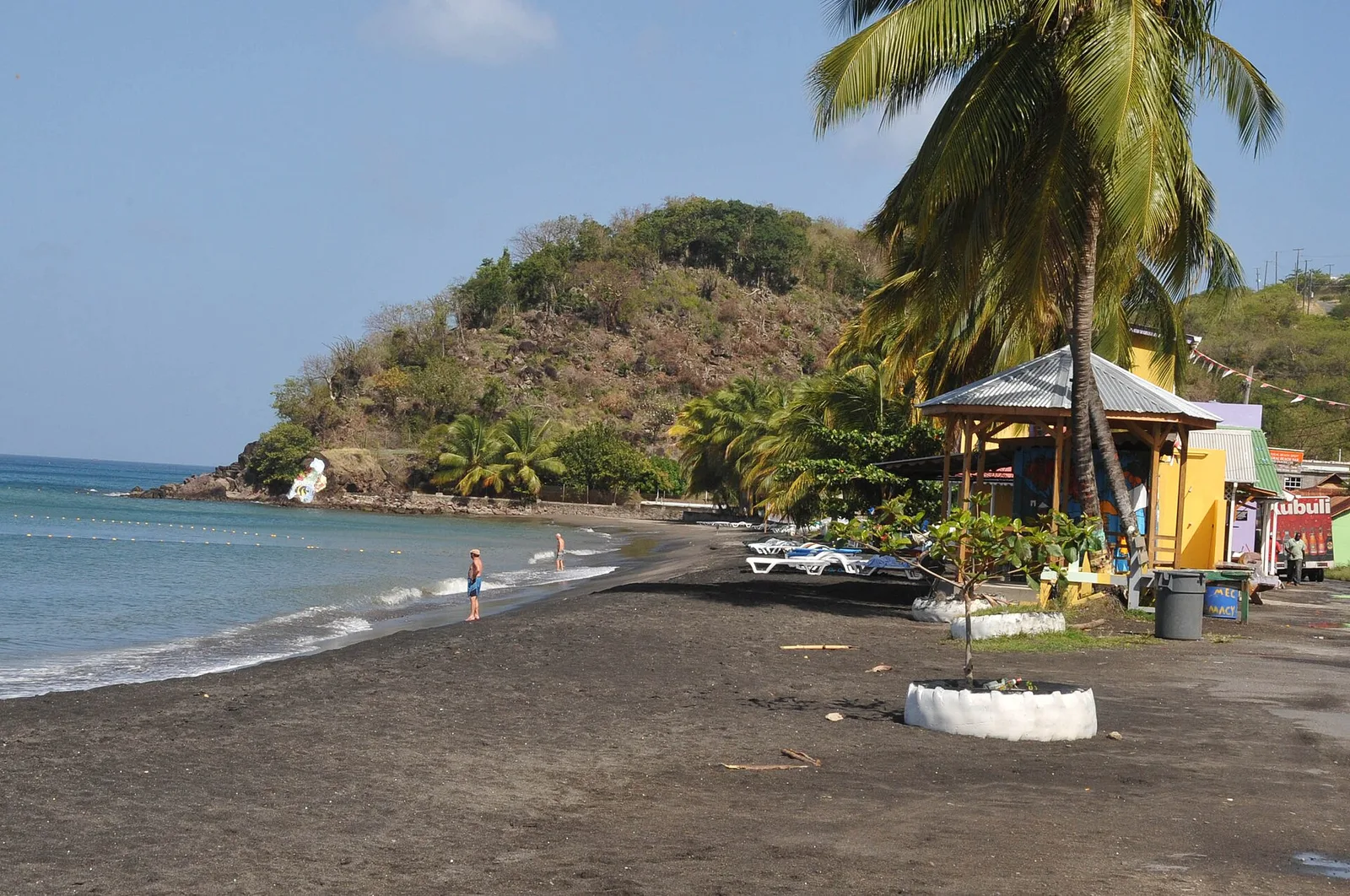
Grenada offers another option for buyers who value an English-speaking setting and coastal communities. It may suit a different routine from Dominica, so visit both rather than choosing from photographs.
The FCDO guidance for Grenada (opens in a new tab) says most crime is non-violent and opportunistic. It also notes occasional violent crime. Secure doors and windows, sensible transport choices and local knowledge remain important. A reassuring general description is not a guarantee for a particular home.
Grenada is not automatically cheap. On the Numbeo page checked for this article, estimated monthly spending for one person was about US$1,126 before rent. The page's last update was 2 October 2026, based on 115 entries from 17 contributors over the previous year.
That is a limited sample. It should not be treated as a minimum income requirement, a retirement recommendation or a quote for your lifestyle. Tourist districts, furnished accommodation and frequent restaurant meals may produce a very different result.
Ask landlords for recent bills and check whether advertised prices are monthly or seasonal. If buying, obtain insurance and maintenance estimates before making an offer. Grenada belongs on a balanced shortlist, but the evidence here does not justify calling it the cheapest choice.
THE DOMINICAN REPUBLIC: LOWER REPORTED COSTS, DIFFERENT RISKS
The Dominican Republic merits attention when affordability is a major priority. Its range of cities and coastal communities gives you several distinct settings to assess. A resort apartment and a home in an ordinary residential district should not share one assumed budget.
Numbeo's country page, last updated on 4 November 2026 when checked, estimated one person's monthly costs at about US$635 before rent. It recorded 1,274 entries from 83 contributors over the previous year. This suggests lower reported non-rent costs than Grenada in these two datasets.
The safety picture needs equal weight. The FCDO's Dominican Republic guidance (opens in a new tab) describes a high crime rate, including opportunistic theft and violent incidents. It also highlights road-safety risks. Lower estimated costs do not cancel those warnings.
Judge neighbourhoods carefully. Speak to residents, visit in daylight and after dark with local support, and examine the route home. Ask about building security, reliable transport and nearby healthcare. Do not assume a managed development removes every risk.
The Dominican Republic can be a cost-focused candidate, but it should not be labelled the safest option on this evidence. If Spanish is unfamiliar, allow for language support when dealing with leases, property documents and local services.
WHAT DO THE COST FIGURES ACTUALLY INCLUDE?
The two Numbeo estimates are for one person's spending excluding rent. They are not complete relocation budgets. Housing, international health insurance, flights, immigration fees and your individual needs can change the total substantially.
For transparency, the figures come from Numbeo's Grenada cost estimates (opens in a new tab) and Dominican Republic cost estimates (opens in a new tab). Both pages change as contributors submit prices. The amounts above are dated research snapshots, not live prices.
Use US dollars only as a common comparison unit here. Ask for actual quotes in the currency you will pay, and allow for bank charges and exchange-rate changes against sterling. A pound-funded household can face higher costs even when local prices stay still.
We have not supplied a matching Dominica figure because we did not verify a sufficiently comparable dataset for this article. That gap should not be filled with a guess. Request local rental, utility and grocery information before deciding whether Dominica is affordable for you.
BUILD A BUDGET AROUND YOUR ACTUAL ROUTINE
Start with housing and list everything included in the rent or service charge. Ask separately about electricity, cooling, water, internet, refuse collection and parking. A low headline figure can conceal several separate bills.
Next, price the food you really buy. Local produce may suit a modest budget, while imported brands and specialist diets can change the weekly total. Shop during your trial stay instead of estimating from restaurant prices.
Include these further categories:
- Transport, including fuel, insurance, repairs or regular taxi journeys.
- Medical insurance, prescriptions and any specialist treatment.
- Residence applications, professional advice and document costs.
- Flights home, family visits and emergency travel.
- Home maintenance, storm preparation and a separate contingency fund.
Keep one-off moving costs separate from monthly spending. Deposits, shipping and furnishing can make the first year unusually expensive. If the plan works only when nothing goes wrong, revise it before committing.
LOOK BEYOND CRIME WHEN ASSESSING SAFETY
Healthcare deserves its own review. Find out which clinics can handle your needs, how payment works and whether your insurer covers a long stay. If evacuation cover is necessary, check its conditions rather than assuming it is included.
Weather and building condition matter too. FCDO guidance for the destinations discussed identifies hurricane risks, with the Caribbean season normally running from June to November. Ask a qualified local professional about roof condition, drainage, flood exposure and access after heavy rain.
Road safety can affect everyday life more often than headlines suggest. Try your likely journeys at realistic times. Check lighting, road surfaces and alternatives if a route is blocked. A short distance on a map may still mean a difficult drive.
Safety is personal as well as practical. Check current laws, accessibility and attitudes relevant to your household. Schools, mobility needs and community support can change which location feels suitable. No national label can replace those checks.
RENT FIRST AND TEST THE NEIGHBOURHOOD
A trial rental helps you separate holiday appeal from ordinary life. Spend enough time to experience shopping, laundry, work calls, traffic and evenings at home. Where practical, visit in more than one season.
Use the stay to gather evidence. Ask for written prices, check mobile reception and test broadband at the property. Speak with several residents rather than relying solely on a seller or letting agent.
Keep notes on noise, drainage, road access and the time needed for routine journeys. A home that costs slightly more but removes a long daily drive may be better value. Your aim is a sustainable routine, not simply the lowest rent you can find.
CHECK RESIDENCE RIGHTS BEFORE BUYING
Owning a home and having permission to live in a country are separate matters. A tourist entry allowance should not be treated as permission to settle or work. Obtain current advice for your nationality and intended activities before signing a long lease or purchase contract.
Use an independent local lawyer to check title, boundaries, access rights and any rules affecting foreign buyers. Ask for a written account of transaction costs, taxes and continuing obligations. Residence and tax rules require separate professional advice.
Our guide to Caribbean holiday-home ownership costs explains further budgeting issues for UK owners. Even if you intend to live abroad full time, it is useful preparation for the maintenance, insurance and currency questions that come with ownership.
SO WHICH DESTINATION SHOULD YOU SHORTLIST?
Start with Dominica if a quieter setting and the FCDO's low-crime description fit your priorities. Consider Grenada if its communities and English-speaking environment suit your routine, but test the budget carefully. Explore the Dominican Republic if lower reported costs are important and you are prepared to investigate its greater safety concerns.
This is a practical shortlist, not a complete comparison of every Caribbean island. There is no verified winner for “safest and cheapest” in the evidence reviewed. The best fit is the place where your housing, healthcare, legal status and everyday spending work together.
For your next step, explore property in the caribbean and use the destination cards to tell us where you would like to buy. Start with a realistic budget and a carefully checked location, then look for a home that supports the life you want.